


REAL TREATS AND TURKEYS A few days at The Edinburgh Fringe
Francis Beckett

The Edinburgh Festival finished last week, and a lot of the fringe shows seen there are destined to end up in London. A few of them – generally the most polished – have already had a successful outing in London independent theatres.
The Edinburgh fringe is massive now, with an estimated 4,600 different shows, if you include standup comedy – and you have to, because come August every standup comic in Britain seems to pitch up in Edinburgh. But is it any good?
The quality varies enormously. Some shows are dire, and leave you lamenting the hour or so of your life that no one will ever give you back. Some are clearly work in progress, with glaring dramatic failings which the writers and directors, if they are any good, will spot and correct before the show goes any further. And every so often there’s a gem – not necessarily perfect yet, but ready to take off.
Such a one was Justice, a one woman show written and performed by American actor Tiffany Esteb. She hopes to bring the play to London. It isn’t perfect yet, but it’s gripping.
It’s about an American lawyer who becomes a celebrity overnight after winning a case by using a freedom of speech argument on behalf of her tech company client which had not taken down humiliating images of a woman posted by a spurned boyfriend. She basks in the spotlight for a few days, until her own spurned boyfriend posts deepfake pictures of a woman’s body being abused, with her head superimposed on it.
We watch her unavailing attempts to persuade the tech companies to take it down. There is a fascinating moment when she is talking to a “tech bro”, she becomes emotional, and he demands she should speak to him with more respect. “So much for freedom of speech” she says.
The plot creaks a bit from time to time, and there is a toe-crawlingly pious ending that needs drastic surgery, but apart from that the script is subtle, multi-layered and nuanced, and the play will be well worth a London run.
I also enjoyed When Vincent Met John, Nick Wilkes’s imagined meeting between John Lennon and Vincent Van Gogh, pitting Lennon’s nihilism against Van Gogh’s work ethic, with a lot of clever nudge-nudge references to Beatles songs and Van Gogh paintings.
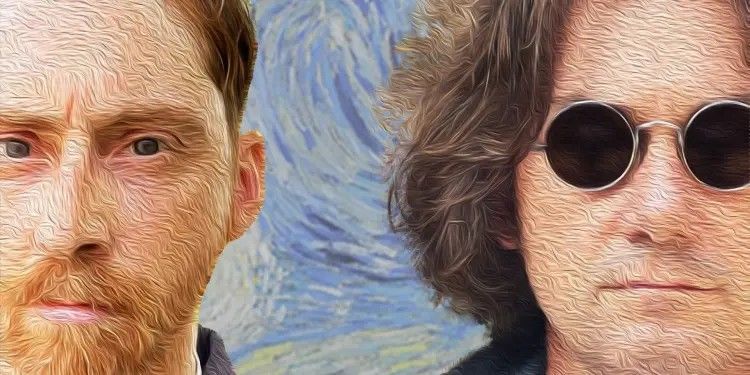
Wilkes himself makes an entirely believable Lennon, having worked hard on the Liverpool accent. It’s not good enough, he says, to study the accent as it’s spoken now; it’s changed since Lennon’s time.
Wilkes gave me an interesting lowdown on the economics of taking a show to Edinburgh. The two actors do everything themselves, including erecting and dismantling the set; they stay in hostels and watch every penny.
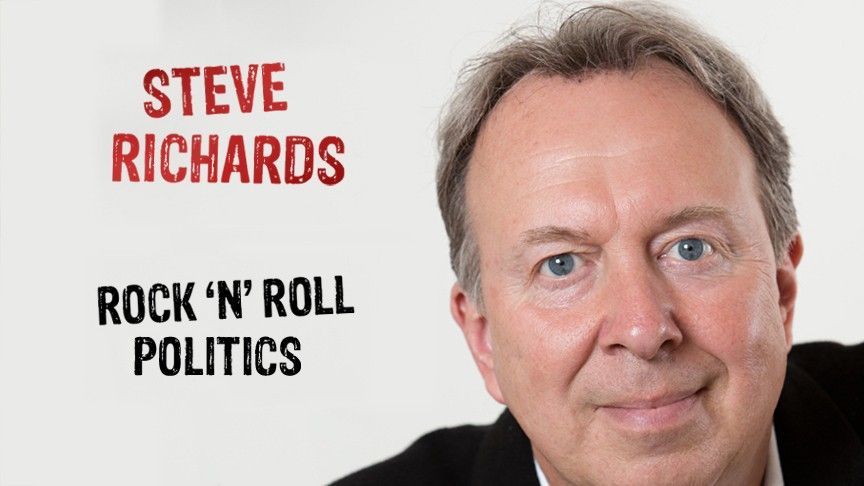
The only shows on the Edinburgh fringe that make money take off from an already established reputation. Such a one is my old journalist friend Steve Richards, whose Rock and Roll Politics performance benefits from the profile provided by his podcast and his monthly London show at Kings Place, the building that houses the Guardian newspaper. It also changes at every performance, giving him the chance of people coming back a second or even a third time.
Richards asks his audience to make political predictions, and uses their reactions to introduce entertaining insights and information from his vast store of political knowledge. He is as near to royalty as the Labour Party gets: his son Jake is the Labour MP for Rother Valley, his daughter Amy was a special adviser to Prime Minister Keir Starmer, his son-in-law is Gregor Poynton, Labour MP for Livingston, and his daughter-in-law Liz Bates is media adviser to Steve Reed, Secretary of State for Housing.
A very few of the standup comics make money and attract big audiences. Ahir Shah is one of these: he has a huge reputation, and people I know have seen him before and loved him.
Alas! Shah has fallen victim to that trap for comedians of taking himself seriously. He began with a long, barely funny disquisition about castes in India. Then he told us how normal he was, compared to “my comedian colleagues who are the Communist children of millionaires”, a cheap dig at Alexei Sayle whose parents were communists (but very far from being millionaires.)

He ended with a long, passionate speech about something or another, and I recalled W.S. Gilbert’s poem about the court jester:
It adds to the tasks
Of a merry-man's place,
When your principal asks,
With a scowl on his face,
If you know that you're paid to be funny?
After that I concentrated on the unknown, the struggling, the up-and-coming. They range from the brilliant to those who appear to be using the audience as therapists. Among the latter was a charming young man who performed in a tiny pub room holding maybe 20 people, called “The Wee Room”, appropriately since it was on the first floor, directly above the toilets.
A more sophisticated exponent of this genre is Aideen McQueen, who talks about sex and relationships, and how badly the men in her life have behaved.

Image: Madeleine Brettingham
The brilliant include Steve Lee, who will be performing at the Kings Head in Crouch End on 24 October. Steve’s persona is Essex Man, and he uses a flat, dry tone, letting his very funny material speak for itself. “My parents didn’t hire babysitters. They just locked us in the bathroom. We were a bit thin by the time they got back from Torremolinos.”
Madeleine Brettingham won the best newcomer award last year, and she too will be performing in London soon. Tall, dignified, commanding and attractive, she has some really clever lines and some arresting social observations.
Brussels-based Lebanese Karl Dagher has about him a kind of effortless charm that enables him to entertain for a full hour without ever raising his voice or saying things to shock. It’s odd, he explains, having a brown skin and a German first name, and he gets several laughs from a story about claiming his coffee from the server. “That’s mine.” “No, this one’s for Karl.”
Casey Filips and Reuben Solo are two examples of the sort of standup comic who treats the audience as his enemy. They are fast and furious and meticulously rehearsed, and on a good night they have so many of the spectators in helpless and embarrassed laughter that the audience becomes its own, highly successful entertainer.
So yes – a few days sampling the Edinburgh Festival fringe will almost certainly throw up some real treats. And some turkeys too, but they’re part of the fun.
Francis Beckett is journalist, author and playwright