

Reviews
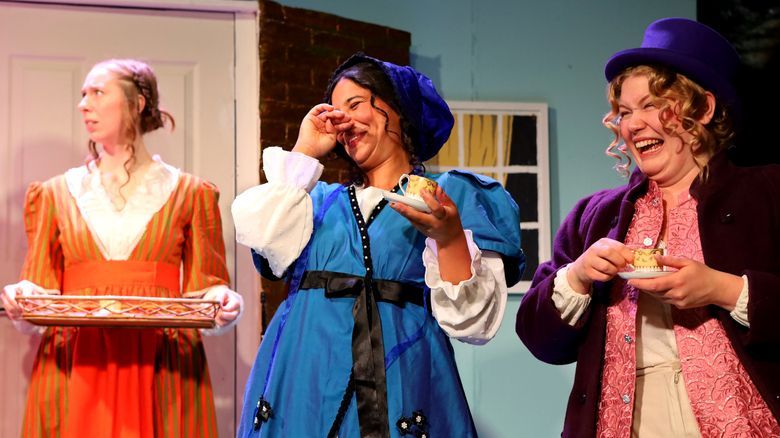
“a production that lifelong lover of theatre, Jane Austen herself, would probably have enjoyed.” ★★★★★ Walking into the theatre you are greeted by rows of seats decorated with white flower arrangements at each end, creating the image of church pews decorated for a wedding. But weddings, romantic love, and the pursuit of marriage is only one small part of Jane Austen’s Sense and Sensibility. This production, with its multi-rolling ensemble, witty and well-paced dialogue, and engaging involvement of the audience, captures the true essence of Austen’s comedy of manners. In the show’s opening musical number, the company recounts the Dashwoods’ misfortune: their father has died and their half-brother inherited almost everything. They are four women (Mrs Dashwood, Elinor, Marianne, and Margaret Dashwood) left without adequate independent financial means to sustain themselves. Leaving their beloved home, Norland Park, and moving (on the kindness of their relatives) to Barton cottage, the sisters find themselves unmoored in a society where marriage is economy. In the adaptation of a novel about society – its expectations, sight, restraint and sensibilities – the company’s efforts to bring the audience into the storytelling is particularly effective. With the help of a few hats and wigs, various members of the audience are transformed into peripheral characters of the show. A particularly humorous episode occurred when Marianne Dashwood (Laura Cooper-Jones) approached postman Thomas asking if anything had come in for her. “Yes?” he replied (nothing had), and when he was approached again later in the show, the audience member replied, “I don’t know,” to much laughter. Thick as Thieves’s production lets Austen’s dialogue and narration shine, supplementing it with dialogue as lively and accessible as hers. The production is at times farcical and at others deeply touching, which made for a thoroughly enjoyable watching experience. The flexibility of the set must also be commended. With a story that spans multiple houses and corners of the UK, and an ensemble playing up to four characters each, it was striking to see how simple changes – one flip of a stage set or the replacing of a family portrait for another with suspiciously similar looking subjects – could suddenly situate the Dashwoods in completely different circumstances. Thick as Thieves’s adaptation of Sense and Sensibility takes the omniscient narrator of the novel and meshes that with the liveness of theatre, to create a production the lifelong lover of theatre, Jane Austen herself, would probably have enjoyed. SENSE & SENSIBILITY by Thick as Thieves Theatre Company at the Arches Lane Theatre, 10-27 September 2026 By Jane Austen Adapted & Directed by Nicky Diss Company: Cast Laura Cooper-Jones - Marianne Dashwood, Anne Steele and Mrs Ferrars Thomas Judd - Edward Ferrars, John Willoughby, John Dashwood and Mrs Jennings Grace Kelly Miller - Elinor Dashwood and Sir John Middleton Laura Smithers - Fanny Dashwood, Mrs Palmer, Lucy Steele and Margaret Dashwood Kaysha Woollery - Mrs Dashwood, Colonel Brandon, Mr Palmer and Robert Ferrars Creatives Director & Adaptation: Nicky Diss Producer: Thomas Judd Associate Producer: Sarah Gain Composer & Musical Director: David Knight Costume Designer: Grace Kelly Miller Lighting Designer: Dylan Lowe DSM: Dan Cox Tickets and other information: Arches Lane Theatre (8 Arches Lane, Nine Elms, London SW11 8AB) 10 - 27 September 2026 Tuesday - Saturday at 7.30pm Saturday Matinee at 2.30pm Sunday at 5.00pm Tickets £20 - 30 / Previews £15 Box Office Social Media Details FB: thickasthievestheatre / X: @thickthieves / Insta: @alwaysthickasthieves Photography credit: KEE Visions
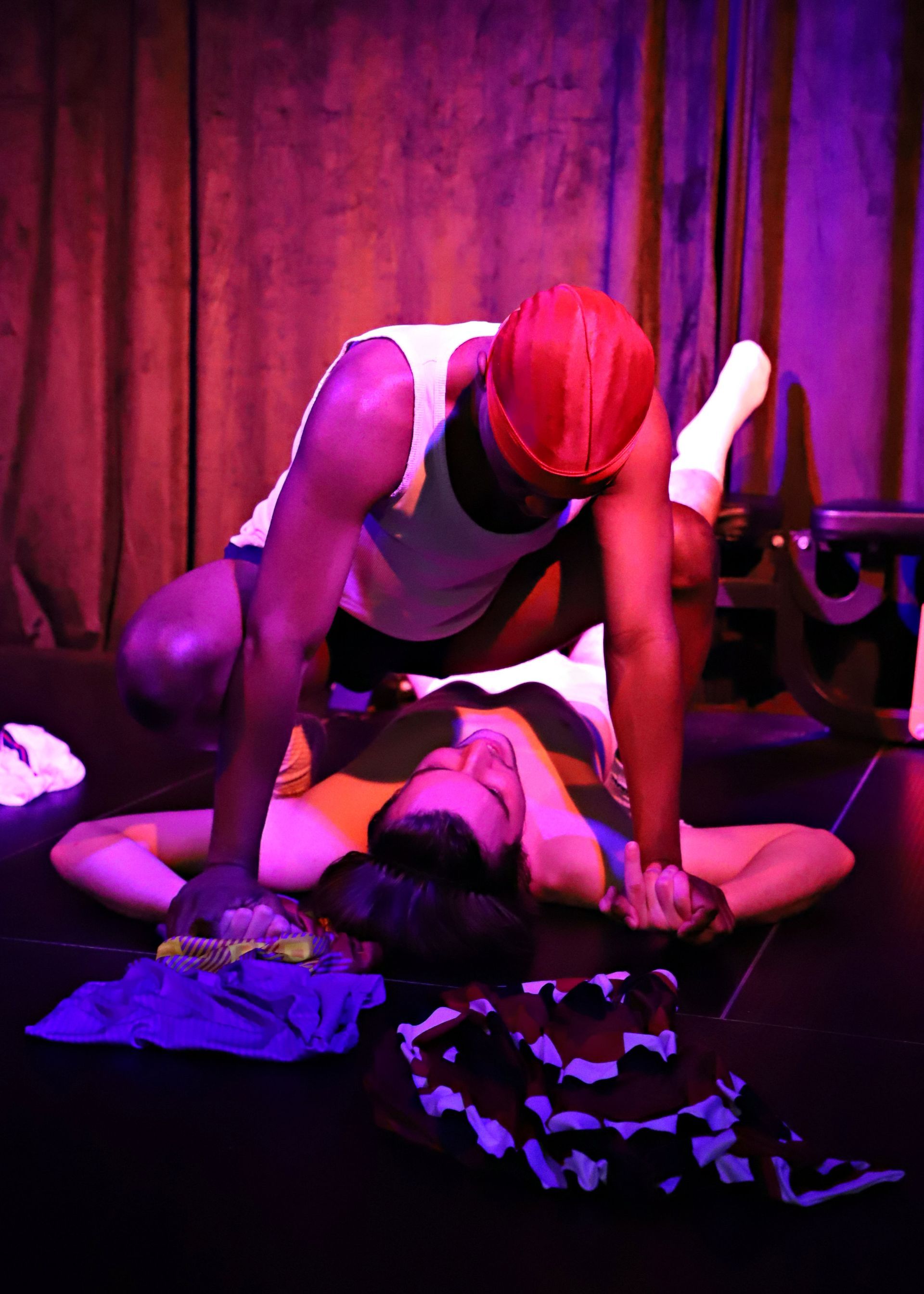
“A solid and enjoyable revival of a quality play” ★★★ The Pass by John Donnelly began life in 2014 at the Royal Court Theatre and has since had a number of international revivals and a BAFTA-nominated film adaptation. The play chronicles twelve years in the lives of two young footballers whose futures diverge at a single, ambiguous moment before a career‑defining match. Over ten years on since its debut, the play’s exploration of sexuality and masculinity is as timely now as it ever was, revealing the emotional cost of living a selfish life curated for public consumption rather than personal truth. In this new and intimate East End production from The Pearly Queen Theatre’s Glenn T. Griffin, we’re brought a solid and enjoyable revival of a quality play. Ben Moxon, giving us his best Russell Tovey, who originated the role, is Jason, the team’s star player, less talented though more popular than his friend Ade, played by Josh Hitchman-Pinnock. In a richly charged first scene of musky bravado and ambivalent lust, the boys as teenagers have a sexual encounter with one another that will haunt them forever. Jason will go on to sportsman stardom, becoming rich and famous, but repressed and hollowed out. Ade will give up the dream and become a plumber, openly gay and in a settled relationship. But neither of them will forget that night. The key here is that the play kind of lives or dies on the two leads’ chemistry, which needs to span and outlast their decade-long absence from each other, uniting them at either end of the play. But there’s already a problem. Their chemistry is okay – a bit meh – but both of them are outshined by Eliza Shea, who gives the strongest performance of the piece as table dancer Lyndsey, a supporting character who spends a night with Jason in the second of the three hotel rooms featured. Jason and Lyndsey sizzle and pop more than Jason and Ade – which means I sort of forgot about Ade altogether until the final act. That sort of defeats the whole point. Moxon as Jason does a very good job of portraying the alluring danger and volatility of his character, a constant subsurface potential for terror. He has great manic eyes and a menacing grin. But it lacks any vulnerability or nuance, which can make the performance read a touch like an impression rather than an interpretation. That, ultimately, reveals the overriding theme with this rendition as a whole. It’s fine, but unoriginal, a bit literal and with nothing new to say. It works because of Donnelly’s great writing – but that was already there. It would be nice to see the company do something different with it. It could be that this new venue is still finding its feet as to what works best on its stage. I can see that comedy, which they already programme, would work very well, as would smaller, one-act pieces or solo shows. For this kind of established piece, I’m not so sure just yet. I applaud their ambition, but the space can’t quite support a full-length play of this dramatic size. Yes, the cast is small but the psychological breadth is big. The action often ends up feeling cramped and a bit awkward. They’ve gone for high realism, which is distracted by the use of the bar at the back, the narrow aisle, and the door, all of which kind of spoil the illusion of a high-end hotel room. The reason they’ve had to do this is because there simply isn’t enough space to do anything else (there are no wings, crossover, or backstage), which severely restricts their creative options, and ultimately leads to the slightly dry interpretation of The Pass we’re shown. Now, that said, I would encourage you to go and see it. The play itself is still topical and important, and it’s a great, evolving venue (with its own nice little bar in the house). We really can’t champion these small venues enough and, don’t get me wrong, it’s still a perfectly serviceable show. I do think the Pearly Queen Theatre will definitely end up a high scorer. Unfortunately, for me, this one is just a bit of an own goal. The Pass Written by John Donnelly Directed by Glenn T. Griffin The Pearly Queen Theatre @ The Bow Bells Pub, 17 September – 3 October 2026 Box Office: https://www.pearlyqueentheatre.co.uk/whats-on Photography: Sheilina Somani Reviewed by Alix Owen Alix Owen is a Pushcart Prize nominated writer from Wales. His work has appeared at the Liars’ League, the Camden Fringe, and in print and digital anthologies internationally.
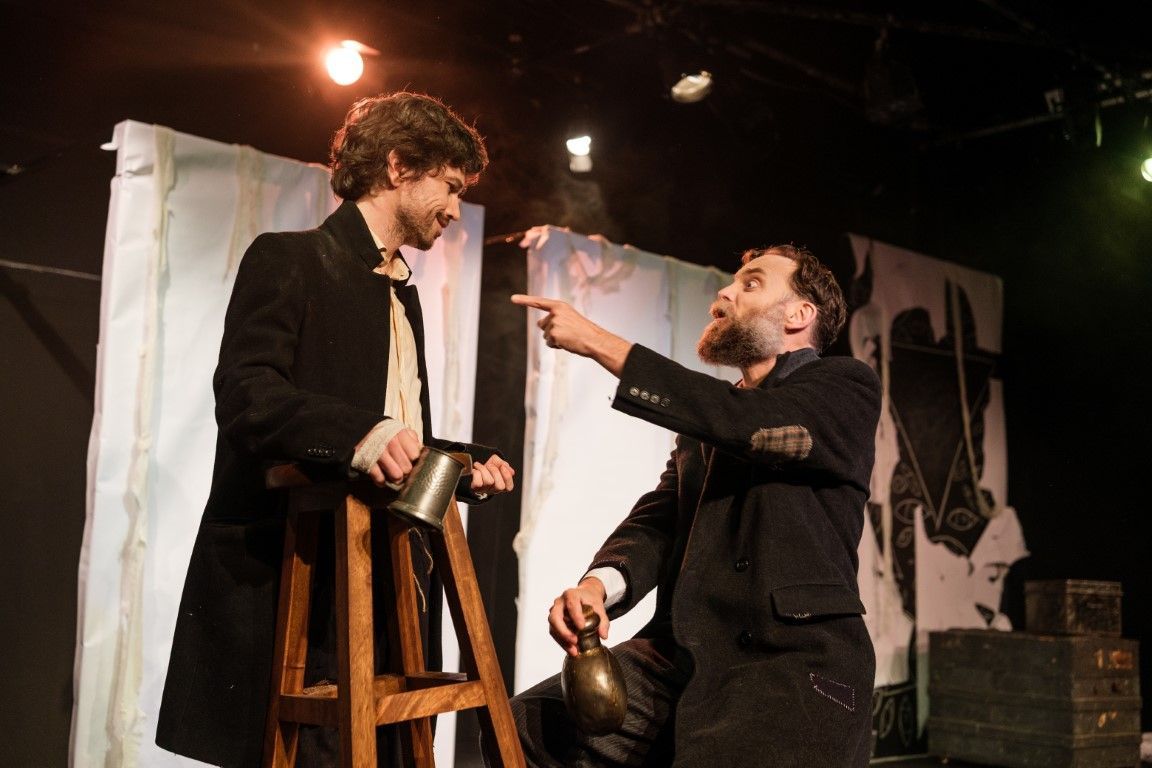
“ Bold and ambitious” ★★★ ½ We first meet our protagonist Raskolnikov, an impoverished former student, moving rocks from one place to another. Barefoot, a piece of string to hold up his tatty trousers, he’s not eating and is behind on his rent. In 1860s Saint Petersburg, there is such dire poverty, “Russia is starving,” after all. Then a chance meeting with a wreck of a man named Marmeladov, a former civil servant whose desolation mirrors Raskolnikov’s own, propels our threadbare protagonist to murder a pawn-broker to whom he has hocked almost everything. Raskolnikov appears leaving with a bag of roubles and the pawn-broker’s sister half-dead. Fyodor Dostoevsky’s Crime and Punishment is a whopper of a modern classic at over 700 pages and around 220,000 words. This debut production by new company, Off By Heart distils some key themes — conscience, empathy, compassion, redemption — into a 90-minute straight-through play. Adapted and directed by Jack Jacobs who also performs the central role of Raskolnikov. Jacobs discovered the novel during lockdown which inspired him to rework it into a scaled down, chamber piece. This three-hander walks the audience through Raskolnikov’s miserable circumstances and explores how an ordinary young man might be pushed into performing an extraordinary act. Andrew Callaghan, who trained at the Guilford School of Acting, gives a searing performance as both the Inspector Porfiry and Marmeladov, the inebriated has-been. Bearing a passing resemblance to Malcolm McDowell, Callaghan dominates the stage and gives everything to both roles. Faye Bishop sings beautifully and deftly multi-roles as Sonya, Marmaladdy’s widow - and the woman Raskolnikov falls for - as well as Natasha, the maid and Lizaveta, the pawn-broker’s sister. Jacobs bears the heaviest weight in the key role and the performance here feels less driven and rather static in comparison. As a psychological novel that explores the pathology of guilt, this is manifested through some effectively evocative and doom-laden, jarring sound design from Ben Bayliss, rather than the physicality of the performance, although the debates and intellectual gymnastics are compelling. The conversations between the inspector and former student - that unpack the writer’s moral framework written in a paper for a journal years before—are gripping not least because it was a way of thinking that indirectly led to Nazism and some notorious murders including those of the Moors Murderers. Creativity abounds in this resourceful interpretation of Dostoevsky’s masterpiece. The monochromatic set design by Geoff Howard sees paper screens eventually ripped through to show both the corrosive effect of guilt and the revelation of the truth. The pawn broker - Raskolnikov’s worst nightmare - is presented as a bizarre mask-wearing, evil God creature who speaks like a Dalek through an excellent mask by Ria Rylatt-Chandaman. To set the scene on this small, simple stage, a tinny transistor radio plays Russian folk songs in the background. All in all, this is an accomplished debut piece. Hats off to Off By Heart who have pulled off an ambitious task with boldness and energy that many others would have baulked at. Crime and Punishment by Fyodor Dostoevsky and produced by Off By Heart at Jack Studio Theatre from 15 - 26 September 2026 BOX OFFICE https://brockleyjack.co.uk/jackstudio-entry/crime-and-punishment-1/ CREATIVES: Written by Fyodor Dostoevsky Adapted and Directed by Jack Jacobs Assistant Director: Eleanor Pead Costume Designer: Brandi Swanson-Cross Lighting Designer: Migle Dulevicius Movement Director: Tika Mu’tamir Tech Operator: Noah Leech Presented by Off By Heart CAST: Sonya/Nastasya/Lizaveta: Faye Bishop Porfiry/Marmeladov: Andrew Callaghan Raskolnikov: Jack Jacobs Photo credit: Vincent Rosec
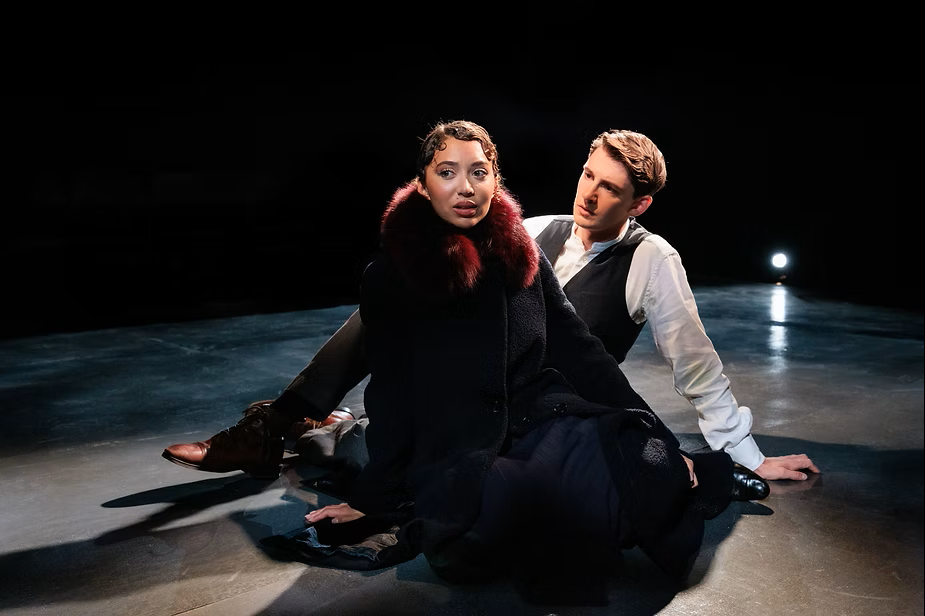
“ rich and engaging adaptation” ★★★★ On a floor-projected old map of London, under a dark night with rising mist, a would-be author is tortured by his dreams and rues his choices. He cuts a lonely figure in this dramatic, film-noir-esque landscape. Bob (Jordan Scowden) is not in a good place. What brought him here? Like many who dream of being full-time writers, Bob has a day job at The Midnight Bell pub, a magnet for the lost and lonely. It’s here we meet most of the key characters whose lives in this rich and engaging adaptation by Simon Reade, intersect but never quite entwine. Originally written as a trilogy of stories by British playwright & author Patrick Hamilton between 1929 and 1934 (The Midnight Bell, 1929; The Siege of Pleasure, 1932 & The Plains of Cement, 1934) in which characters overlap, loop in time and criss-cross, this production of Twenty Thousand Streets Under the Sky, directed by Matthew Iliffe and produced by Ashley Cooke for Troupe, distils, amplifies and makes chronological sense of the trilogy. This is 1929, between wars with burbling discontent and uncertainty in the background: the Wall Street Crash, National Strikes and short haircuts for women. The Midnight Bell, around which all the events coalesce, is represented by a pub sign and a minimal bar. It’s a plaintive, melancholy name for a pub, recalling John Donne’s ‘For Whom the Bell Tolls’—itself a meditation on human connection—and this is a location of unrequited love, achy yearning and desire. Joe’s co-worker, barmaid Ella, a guileless soul, has eyes on Joe. But Joe’s head is turned by Jenny Maple, a glamorous woman and regular, also a prostitute. Mr Eccles meanwhile, a well-upholstered, well-to-do- older man from an army family fancies Ella, which puts her in a fluster of incomprehensibility. Do any of these attractions or love affairs have hope of blossoming into something meaningful? The characters, their needs and wants are all clearly wrought and the cast is engaging and entertaining. Michael Maloney as Ernest Eccles brings a wealth of thespian experience to the role. Performative and theatrical, he offers great comic timing twined with moments of intense sadness. Yanexi Enriquez dazzles as Jenny Maple. With her marcel waved hair and purple fur-collared coat, she plays her role with seductive, persuasive charm. Formally, a factory worker and domestic servant, the economic circumstances around her professional switch are powerfully demonstrated. When she is preyed upon by George Perry, a sneering, disingenuous, amoral middle-class man, who plasters her with drink and rapes her, she falls with hesitancy, nuance and feeling into a different social strata and world. Alex Bhatt as George Perry is unspeakably odious as the toffee-nosed predator, a lizard in sock suspenders. Jenny didn’t have a chance. At a well-paced 2 hours 20 mins with an interval, everyday economics and exploitation bind all the characters in Twenty Thousand Streets Under The Sky. What is vividly shown in this depiction of 1929 London is a clear pecking order with women at the bottom. The inequalities of the class system are embodied by the entitled and confident Eccles and Perry - there are no middle-class women in this story. There are sub-stratas in this hierarchy and little evidence of sisterhood. Ella, although she's not “a lady with haitches,” distinguishes and distances herself from Jenny, who she describes as “a creature”—the lowest of the low. But exploitation works both ways and Jenny, who has learnt to be a survivor, soon divests Joe of his savings. Best known for his work that has been turned into films—Rope, Gaslight and Hangover Square, Twenty Thousand Streets Under The Sky is an excellent introduction for newbies to Patrick Hamilton who wrote evocatively about London and its dwellers, “the weird teeming aquarium of the metropolis.” Although almost a hundred years old, the demands of the capital that drive the characters are ones that audiences will recognise. This remains a city underscored by economic uncertainty, hard times and class division. Its inhabitants, crowded into these twenty thousand streets, still come to chase dreams, make money and find connection. Twenty Thousand Streets Under the Sky produced by Troupe will play at Southwark Playhouse from 10 - 17 October 2026 Box Office CAST: Emily Beck : Understudy Alex Bhat: George Perry Yanexi Enriquez: Jenny Maple Lucy Gray: Prunella / Landlady / Waitress Rosalind Lailey: Ella Dawson Michael Maloney: Ernest Eccles Jordan Scowen: Bob CREATIVES: Patrick Hamilton: Author Simon Reade: Adapter Matthew Iliffe: Director Ellie Wintour: Set and Costume Designer Alex Musgrave: Lighting Designer Elizabeth Purnell: Sound Designer and Composer Sam Spencer-Lane: Movement Director Jess Tucker Boyd: Intimacy Director Alice Stokoe: Costume Supervisor Lois Sime: Stage Manager Elysia Beaumont: Assistant Stage Manager Amber Charlie Conroy: Assistant Director Lewis Champney for eStage: Production Manager Kate Morley PR: PR Mobius Industries: Marketing

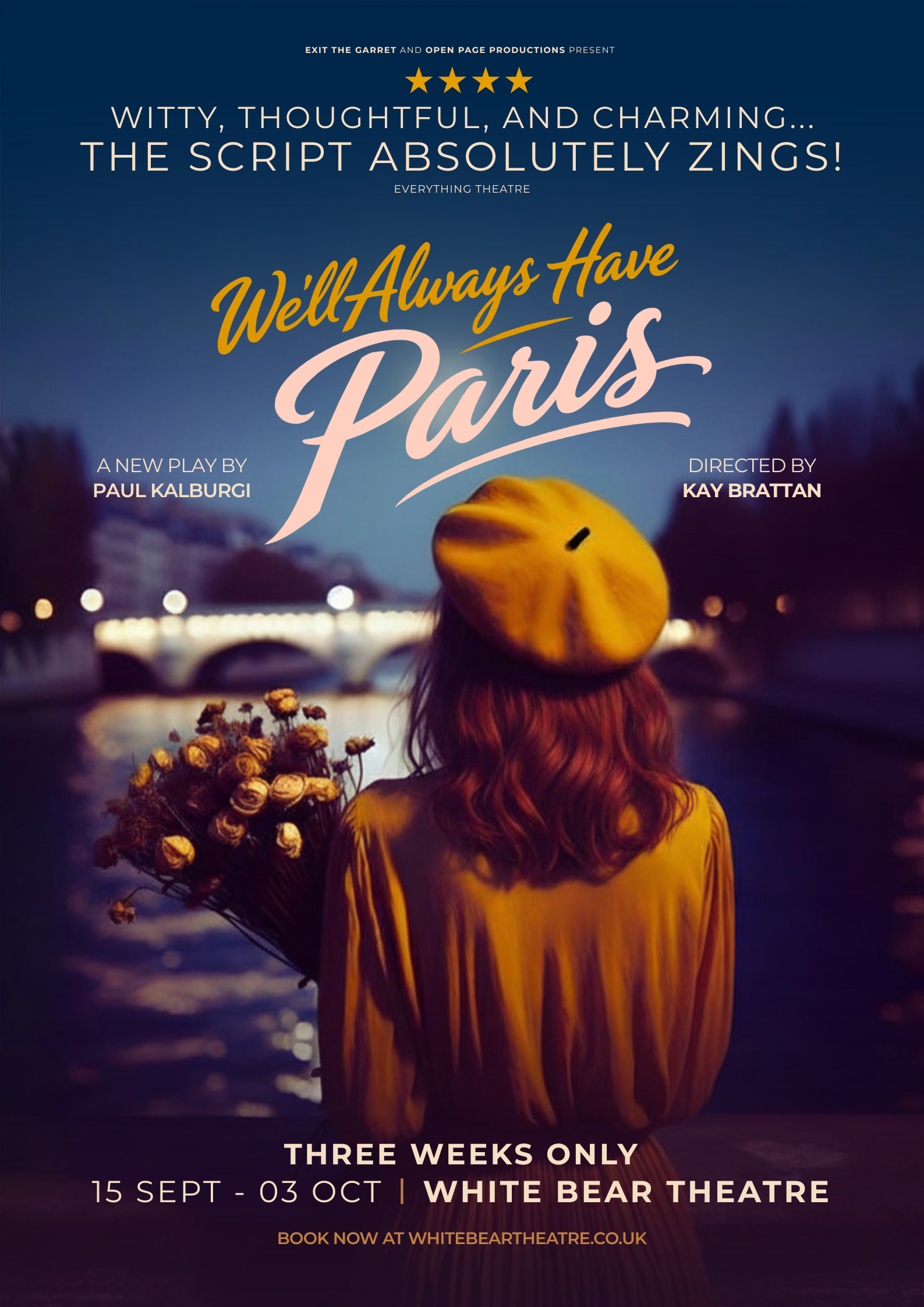
“ wonderfully clever and versatile performers” ★★★ We’ll Always Have Paris is an amusing and sometimes sad romcom which makes huge demands on its three-strong cast. The best thing about the production at the White Bear is the tremendous professionalism and versatility of the actors, all of whom are on stage most of the time (well, at least, Miranda Colmans is on stage pretty well throughout the show). Director Kay Brattan has not made it easy for them. A lot of what she has put in works nicely. A clever arrangement of columns makes it fairly easy for the cast to change the set. A rack of French magazines, prominently displayed, shifts the action neatly to Paris. But the White Bear Theatre is a small L-shaped space, and the performance area, in the corner of the L, works best for an intimate play with a director who wants to work with the space. In this case, there is just too much of everything – too much set, too many props, too much music. It needs less impedimenta, or more space. I think the team is aware that the production needs to be simplified. Whatever can be done in two days will be done. This will help the audience to take in the story, which zips along nicely, aided by some clever pieces of social observation: “Stop projecting binary gender identities on animals. Progressive, eh?”, “Gerry and I were building a life together. Before that I had not built so much as a Billy bookcase” and Billy, for your information, is an IKEA brand bookcase. Ms Brattan can certainly spot a good actor when she sees one. Cyril Blake and Eliza Williams are wonderfully clever and versatile performers. They each play several parts, and are sometimes hardly offstage before they must come on again as someone different. This requires really special skills of an actor. Of course we know we are seeing the same actor, but he or she must give us enough to help us suspend our disbelief, and they never let us down. But the real burden of the show falls on Miranda Colmans. She plays the protagonist, Ginny, whose love life is what the play is all about, and she never leaves the stage. The burden of making the show works falls on her. If the part is not played well, the play fails. Colmans puts in a tremendous bravura performance. She takes us along with her moods, her ups and her downs, her happiness and her heartbreak. We laugh with her and cry with her, and it is Colmans we remember as we walk out of the theatre. We’ll Always Have Paris produced by Exit the Garret in association with Open Page Production will play at White Bear Theatre from 15 September - 3 October Box office link: https://www.whitebeartheatre.co.uk/whatson/we'll-always-have-paris Writer: Paul Kalburgi Producer: Exit the Garret in association with Open Page Productions Director: Kay Brattan Cast Ginny: Miranda Colmans Jerry and other arts: Cyril Blake Trish and other parts: Eliza Williams Reviewer Francis Beckett’s latest play is Make England Great Again at Upstairs at the Gatehouse.

‘a modern classic’ ★★★★ ½ Chewing gum starts off sweet, but it gets tougher as you chew it. The show immediately brings us into the bright, high-energy world of 14-year-old Tracey. It feels joyful and even adorable, but often without warning, the play reveals the darker ways in which race, sex and class shape her life. Lauryn Ajufo completely convinces us that Tracey is fourteen. Her performance is lively, funny and remarkably versatile. She fills the room with Tracey’s restless energy, while switching between the different people with ease. Then, in a split second, she shifts into a moment of realisation as Tracey begins to see the darker realities around her. What shines most in Anthony Simpson-Pike’s direction is the handling of these subtle changes. He allows the darkness to emerge gradually from the same world that has just made us laugh. Nothing is overstated. Coel’s writing is alive, rhythmic and so real. It still feels immediate, giving us an insight into lives that, as the director has mentioned, we do not often see on our stages. The creative elements work together harmoniously: Xana’s sound design is subtle but effective, while the grey set provides a sharp contrast to Tracey’s colourful personality. The show lasts only an hour, but it is packed with humour and emotional turns, keeping the audience engaged. It moves quickly but still gives us enough space to absorb the confusion Tracey is going through. This is the first major UK revival of Chewing Gum Dreams, which premiered in 2012. Theatre503, a venue known for championing debut writers, brings Coel’s own debut play back to the stage and presents it as the modern classic it has become. Read LPTM interview with director Anthony Simpson-Pike here Chewing Gum Dreams 10 Sep - 17 Oct 2026 Written by Michaela Coel Performed by Lauryn Ajufo Directed by Anthony Simpson-Pike SOLD OUT Returns only https://theatre503.com/whats-on/chewing-gum-dreams/ Photography credit: Ikin Yum
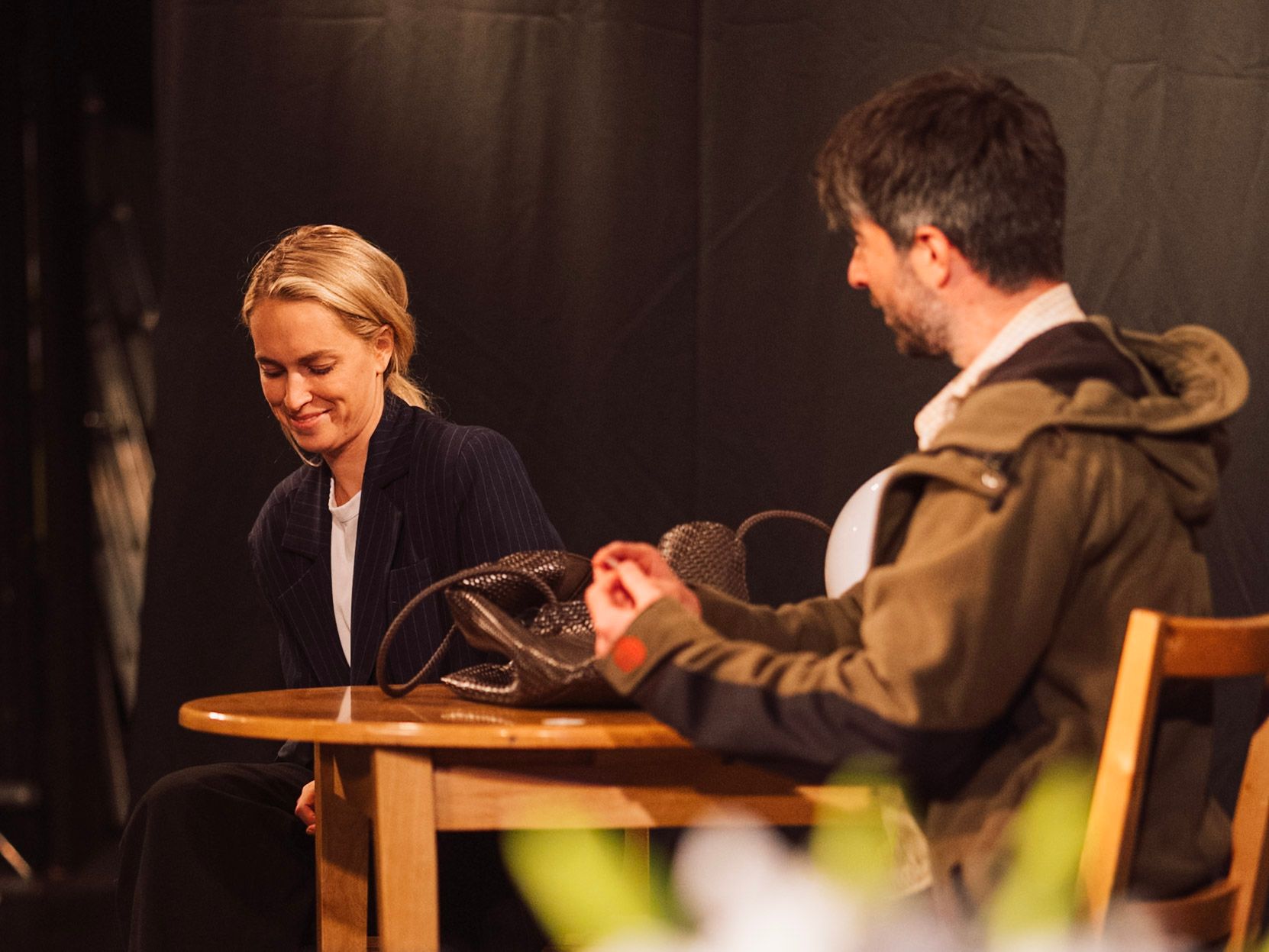
“ a classic two-hander” ★★★ There is nothing worse than waiting for a package except maybe the death of a parent. These realities, namely the relativism of emotion and lived-experience itself, appear at the heart of The Departure by Tom Wells at The Lion & Unicorn Theatre in Kentish Town, this September. As the audience enters the Lion & Unicorn black-box, Ross (Tom Wells) is already on-stage pacing his flat with a phone held to his ear. This direction from Jay Ford places the character “on hold” so that when the lights finally go down, the ambient “hold” music comes in and there is a visceral sense that Ross has been waiting an unreasonably long time for an update on his package. Moments later, Lily (played by Harriet Chomley) returns from her mother’s funeral to disrupt any sense of understanding. The flat, it turns out, is actually hers. And Ross, despite being pantsless in her living room, is a stranger. He’s been crashing at a mutual friend’s invitation, and will be headed to Heathrow, he promises, just as soon as his passport delivery arrives. The Departure is a classic two-hander. Two strangers with different worldviews, each facing a critical existential crossroad, find themselves trapped in a flat for 80-minutes of conversation that will forever change the course of their lives. The problem with this particular two-hander is that neither character ever sees past their own projection enough to believably change. Wells’s performance is the play’s emotional center. His complete embodiment of Ross’s unique blend of assuredness and sensitivity grounds the play in an emotional authenticity. Chomley’s performance is also deeply honest and humorous as the neurotic, hard-on-herself-and-everyone-else grieving scientist. Unfortunately, the characters themselves - particularly Lily - are frustratingly and almost unbelievably myopic. Their narrow-minded insights into themselves can be confusing but their insights into each other toe the line of downright damaging. The characters are seemingly unable to step outside themselves for a moment and cannot validate that the person in front of them has been shaped by entirely different formative experiences. The Departure touches upon interesting themes and ideas including the parent-child relationship, the role of forgiveness, and the formation of identity. Wells is clearly interested in exploring how humans navigate painful emotions and the various merits of facing, sublimating, or repressing grief and trauma. There is a particularly interesting discourse about personal independence vs the need for human connection and a fascinating allegory of the periodic table of elements. The script’s main issue is its editing. The Departure could clarify its own message and its own arc down to a 60-minute runtime. A tighter script would cut repetitive conversations that become grating on a loop. At present, the audience is forced to listen to the same excerpt from a drafted speech Lily has written no less than three times. Much like the recurrent disagreements, this repetition does not escalate, build, or add new information, it is simply redundant. The Departure also suffers a lack of action. The concept of two strangers trapped in a flat waiting for the release of a delivery is clever, but opens the door for the pitfalls of stagnation that The Departure does not avoid. Without dynamicism, dramatic tension or conflict that genuinely escalates, there is no catharsis or climax. Instead, the constant emotional up-and-downs become tedious, diminish the stakes, and fail to achieve potential impact. The Departure at The Lion & Unicorn plays until September 19. Box Office: https://www.thelionandunicorntheatre.com/whats-on . WRITTEN BY: Tom Wells DIRECTED BY: Jay Ford OTHER CREATIVES: Harriet Chomley RUNNING TIME: 85 Mins (No Interval) Photography credit: Jay Ford
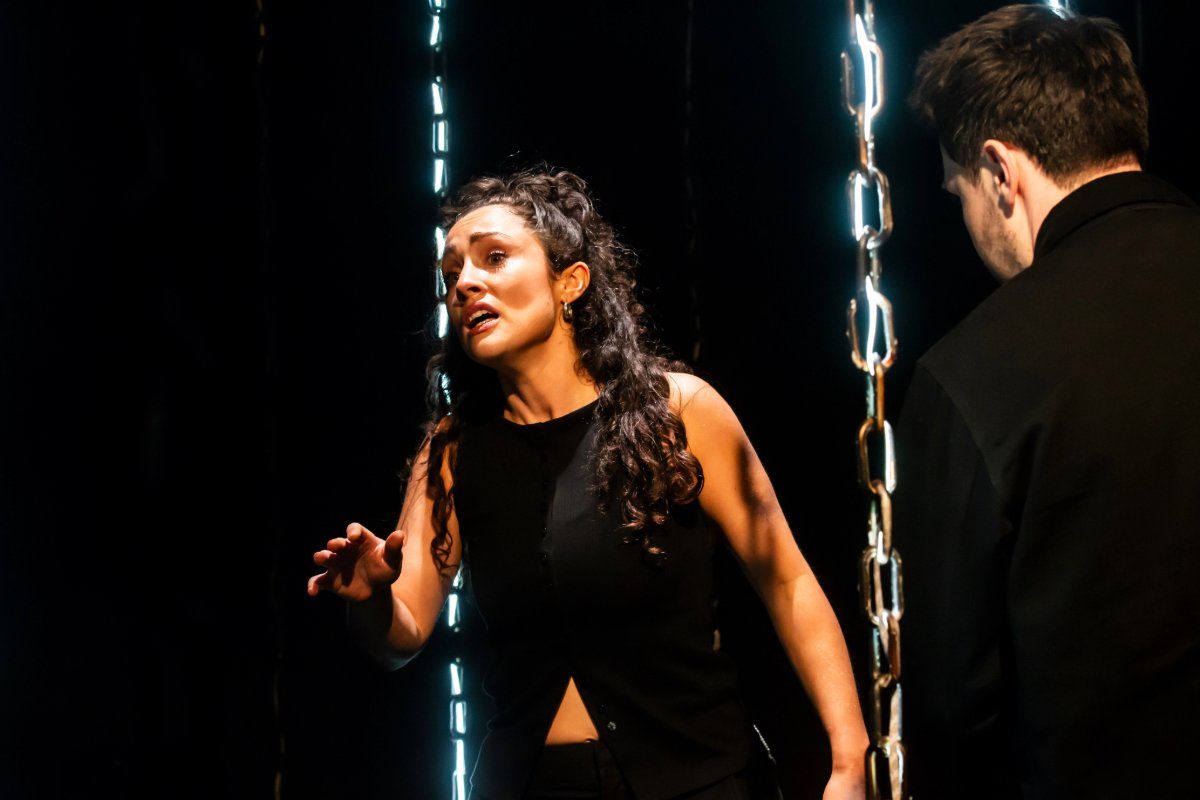
‘ a well-crafted new play, driven by packed dialogue, clear direction and a versatile cast.’ ★★★ ½ Based on the writer’s own experiences, the play follows three workers attempting to survive London’s gig economy: a hedonistic taxi driver, an aspiring actress working as a waitress, and a compassionate carer whose fatal mistake sends all three lives spiralling into chaos. As their stories collide, the play expands into a tale of corruption, political conspiracy and the precarious lives of those who keep the city running without ever being granted real security within it. The set design allows the space to utilize imagination with chains and led lights, and the video projections add to the restless atmosphere of the city. The production finds its rhythm from the outset, with its high physical energy and high-octane performances. The actors shift rapidly between comedy, desperation and confrontation. The difficulty is that, despite this exciting dynamic, the production does not feel like it travels very far. The same heightened rhythm established at the beginning continues almost until the end. The pace initially creates excitement, but without sufficient variation it gradually becomes repetitive, leaving little room for silence, tension or genuine surprise. There is plenty happening in Night City , both narratively and visually, but its relentless momentum ultimately works against it. This is an energetic and skilfully executed production that vividly captures the pressures of precarious urban life. https://southwarkplayhouse.co.uk/productions/night-city/ Photography by Lidia Crisafulli The Company Jack Ambrose Helena Pipe Bex Smith Creatives Max Wilkinson Writer Ebenezer Bamgboye Director Olivia Jamieson Set and Costume Designer Arnim Friess Lighting and Video Designer David Lewington Sound Designer Rose Ryan Movement Director Fran Cattaneo Casting Director Emma Langan Production Management Venus Raven Stage Manager Clarisse Makundul Producer
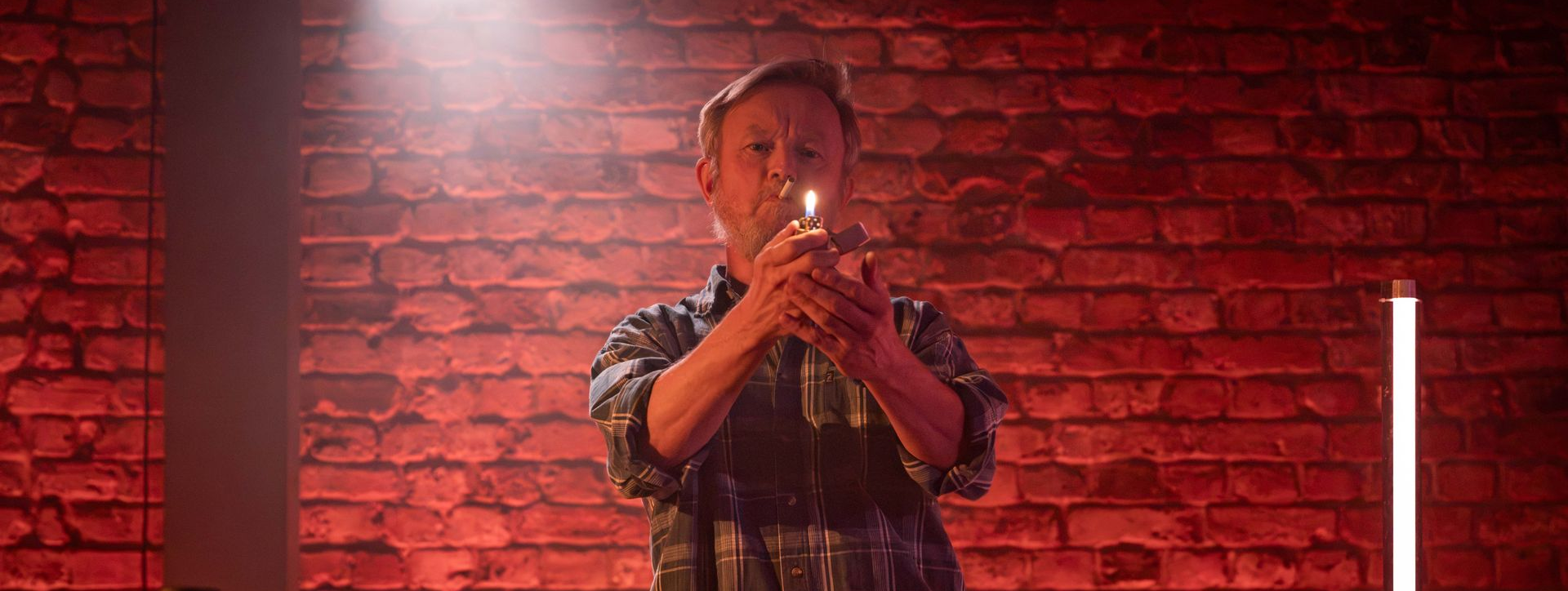
’Too many un-focussed ideas’ ★★ Paige is looking to cause some chaos. She and others are climate activists and road closure to a countryside sanctuary is their latest effort to show themselves and hopefully get others to understand and agree with their view of the world. On this day, however, Paige encounters Eddie who is holding a memorial for his late brother. Eddie doesn’t like Paige. Paige doesn’t like Eddie. The perfect set up for the world premiere of John Webber’s Fire Fire. The two hander is performed in the Arcola’s studio theatre and following their initial ‘meet cute’ the duo continue to bump into one another - not implausibly - and their conversation widens. We learn that Paige and her partner are at breaking point and that she had a challenging upbringing. Eddie is divorced, has a daughter and is looking for more to his life - and his health is deteriorating. Paige, a young woman of colour and Eddie, a middle aged white man from Essex are natural ‘opponents’ but who find common ground through talking and thinking - and understanding what drives the other. In a neat if slightly uninspired step-stage and lighting that adds more than it takes, Fire Fire has all the ingredients to be a thought provoking meditation on how opposites can find common ground & goals in light of personal and global differences. But, for a number of reasons, this just doesn’t work. Both performers work hard and well. As Paige, Gabrielle Brooks (so good a few years back in Get Up, Stand Up!) is a little too one note whilst Chris Simmons’ Eddie has greater depth and you believe his lived experiences. Indeed, all the best bits are when they are talking to one another. Much less good are the singular turns to the audience and as we head towards the climax, the whole thing just becomes muddled and slightly baffling - too many themes, too many metaphors and it’s also about 20 minutes too long. Attempts at humour don’t land and the moments which should move the audience didn’t work for me I’m afraid. All in all, there is clear writing talent here but too many un-focussed ideas do not a great play make - and this never catches fire. Fire Fire by John Webber Arcola Theatre https://www.arcolatheatre.com Produced by Webber & Co and Metal Rabbit Productions Directed by Jennifer Tang Starring Gabrielle Brooks & Chris Simmons Images: Mark Senior
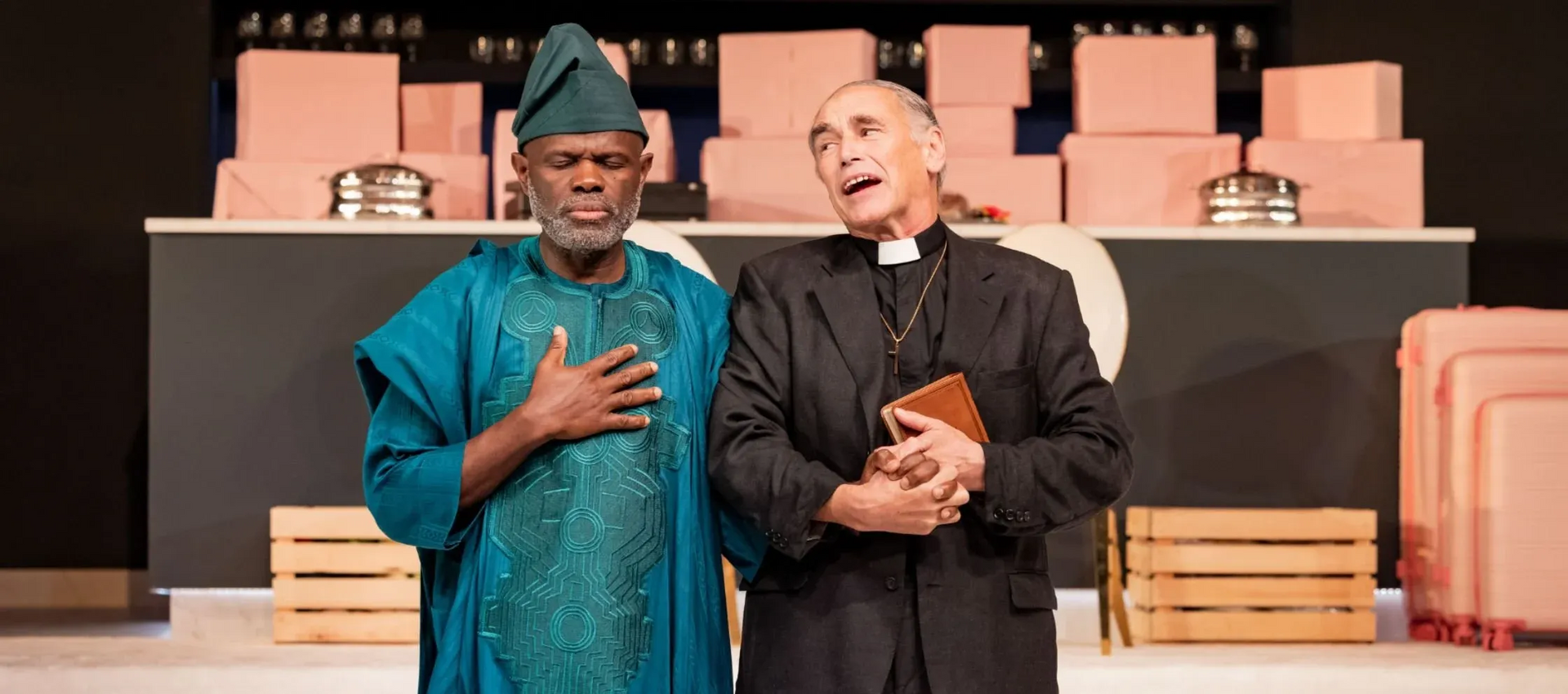
'blasting the cobwebs from Molière’s wig' ★★★★★ There’s love in the air and a wedding on the horizon. We’re in the luxurious home of Oga, a proud Nigerian family man whose daughter, Adenna will soon marry Sinclair, her Jamaican beau. However, this joyful news is eclipsed by the arrival of Pastor Blake, whom Oga, a religious man, welcomes like Christ himself. “To know him is to know God.” But is this pious pontificator in a dog collar, fond of spouting Biblical verse and offering advice, all he's cracked up to be? As we watch him ingratiate himself into the heart of the family, the audience witnesses the power of belief, machinations of manipulation and the cost of blind faith. Written in 1664, Tartuffe , a satirical comedy by Molière, France’s Shakespeare, was scandalous at the time for its mockery of the Catholic church. Some demanded Molière be burnt at the stake for this play. Over 400 years later, this fantastically funny production, according to Marylebone Theatre’s Artistic Director, Alexander Gifford is both “a revival and new play.” Tartuffe (Remixed) is the inspired brainchild of writer/director Darren Raymond, AD of Intermission Youth Theatre, and Mark Rylance, acting royalty and also a founding trustee of Intermission Youth Theatre. Transposing the narrative into an African-Caribbean household is a masterstroke. Adherence to religious values and the importance of Pentecostal or Charismatic church communities is a colonial throwback and still features large within the African diaspora. It’s a wholly convincing alternative to the original scenario of a French priest among Catholics. Here, where God matters and his servants hold great status and sway, a white Anglican vicar in an all-black community would be welcomed and (largely) trusted, even if he arrives with no possessions and his suit looks a bit shabby. Mark Rylance as Pastor Blake, the amoral imposter, fuses pantomime villain with Dick Emery’s vicar. Shifty as they come and dodgy as hell, there’s no end to his wickedness. With sticky-out teeth and a cloying quality, he’s the type of antagonist an audience loves to hate and wants to see punished. Rylance, “a wolf in shepherd’s dress,” gleefully embraces his role as the token white man and a baddie at that, in a super-talented all-black cast that dazzles across four generations. All the actors in this show and many of the production team are part of the Intermission family and either trained with or supported the youth theatre through workshops or mentoring. Usifu Jalloh's Oga, the patriarch rules his home with unyielding authority; his eyes glitter with Christian zeal. Morenike Onajobi gives a magnificently regal, kick-ass performance as Kemi, the bride’s best friend who can see what others cannot. Suzette Llewellyn is magnetic as the devout, bible-hugging Grandma. While it goes against the grain to have such a busy cast, the intergenerational energy is raucous, authentic and gives many opportunities to play out shifting dynamics between father and son, mother and daughter, husband and wife etc. At times of fraught division, it’s like an outtake from the Jerry Springer Show - but much more glamorous. Designer ULTZ, Maybelle Laye (Associate Costume Designer), and Shola Ajayi (a British Nigerian fashion designer) co-create a gorgeous rainbow cavalcade for the traditional Yoruba Wedding. Honouring the original format of rhyming couplets in iambic pentameter, the fresh text is chopped, sliced and mixed, like music sampling, intercut with Afro-Caribbean vernacular and street talk. It’s funny, entertaining and accessible. While reading the original synopsis of Tartuffe: turgid, convoluted and complex - you may lose the will to live, this new version blasts the cobwebs from Molière’s wig and electrifies the original narrative with new relevance. In this age of the forked tongue, we are saturated in fake news, duplicitous presidents, Ai-generated commercials, and The Traitors. Tartuffe, the Imposter , to give the original its full name feels entirely relevant and Tartuffe (Remixed) is a cautionary tale of appearances that deceive and words that lack sincerity and the truth of this message will resonate across generations. At Marylebone Theatre until 24 October BOX OFFICE Director & Writer: Darren Raymond Designer: ULTZ Lighting Designer: Simisola Majekodunmi Sound Designer & Composer: Duramaney Kamara Associate Costume Designer & Costume Supervisor: Maybelle Laye General Manager: Wild Yak Presented by Marylebone Theatre, Patrick Myles & David Luff & Shakespeare Road in partnership with Intermission