





REVIEW: The Lost Art of Keeping a Secret at The Jack Studio 3 - 7 March
‘Intelligent, funny, and offers consistently provocative questions regarding morality, repression, and the ways we construct values individually and as a collective’ ★★★★
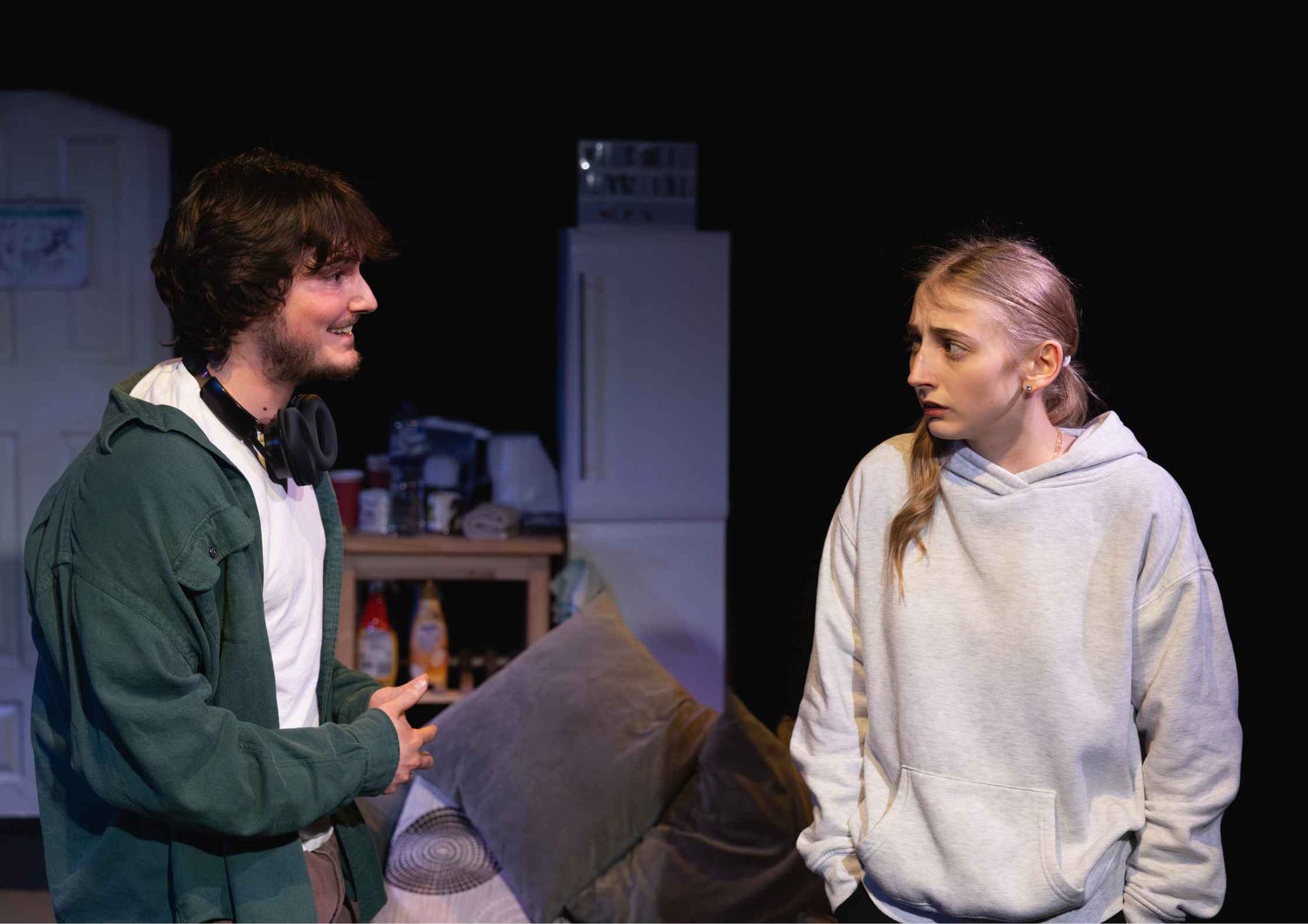
There is no obvious main character in The Lost Art of Keeping a Secret, the thought-provoking new play by George Ryder and Brodie Husband, presented by Linnett Theatre at Jack Studio through 7 March. Instead, it is an ensemble piece following five central characters. Charlotte, Henry, Bex, Luke and Kane are first-year university students with a shared physical and metaphorical place in the world. In a literal sense, they are flatmates. In a figurative sense, they are all at the precipice of adulthood, shedding their childhoods and shaping their future selves in real time.
This context is essential. The same questions of responsibility, identity, and morality that plague young adulthood are threaded throughout the play. The Lost Art of Keeping a Secret looks at how humans manage base impulses, control urges and navigate desires, especially when involving other people. Numbness is central; Ryder and Husband appear to be examining why and how we numb ourselves and our lives. This exploration reinforces the significance of the play’s setting. Although the desire to desensitize and the need for impulse control exist at all stages of life, the pervasive substance abuse associated with university life gives the perfect backdrop for this particular discourse.
In the absence of a clear protagonist, audience perspective and allegiance shifts throughout the play. As perspective shifts, location remains constant. The stage is set as the flat’s common area, complete with a dining table, couch, and small kitchenette. As in a traditional sitcom like Friends, characters enter and exit as they go about their lives, overlapping in the common area in various iterations. The nature of a shared common space is the perfect marriage of content and form – the dynamic of the space and the behavior of those in it changes based on who is home. The set design is also cleverly used to both spotlight and safeguard the show’s central secret, and is just one example of excellent direction and vision from director Emily Prosser-Davies.
Despite the shared circumstances of their characters, Ryder and Husband have written five distinct young adults who are fully-realised while evading stereotypes. Charlotte, played by Katie Emanuel, could have easily fallen into the trope of the repressed Catholic school girl. Instead, she is three-dimensional and relatable, both because of and in spite of her ingrained, misguided moral superiority. Emanuel impressively captures each phase of Charlotte’s emotional arc. Bex, played by Emily Dilworth, provides a foil to Charlotte’s version of femininity. Bex rejects sanctimony and finds liberation in sexuality and nightlife. Dilworth embraces Bex’s unapologetic spirit, along with her vulnerability. Kane, played by Ollie J Edwards, is the most opaque member of the flat. This opaqueness is intentional - we are introduced to Kane as the final, most unassuming flatmate. Over time, however, his character comes increasingly into focus and by the end of the play we understand Kane as the true master of the lost art. Edwards expertly delivers the play’s central and most disturbing monologue.
Writers George Ryder and Brodie Husband also appear onstage. Ryder portrays Luke, perhaps the play’s most confusing character. Despite Ryder’s performance, Luke’s motivations are never clear, and his overall personality and reliability remain frustratingly oblique. Luckily, this frustration is largely made up for by Ryder’s charm and the fact that life is full of such enigmas. Husband portrays Henry, arguably the most compelling character. In the role, Husband is funny but avoids making Henry the butt of the joke. Regardless of Henry’s decisions, there is deep pathos to his character. He is probably the most memorable part of the play; if things had gone differently, he could have had a great spinoff.
The Lost Art of Keeping a Secret plays a dangerous game with how many topics it can contain in its ninety-five minute run time. Themes of judgement, grief, guilt, and more are picked up and quickly put down. But at its core, the play is intelligent, funny, and offers consistently provocative questions regarding morality, repression, and the ways we construct values individually and as a collective. Theatregoers who do not care for neat, tidy endings will be pleased. The Lost Art of Keeping A Secret ends abruptly, allowing audiences to decide for themselves which of the preceding pieces and moments were most relevant. Different viewers may have different perspectives on if the ending undermines or augments what came before. Some viewers may decide that what came before did not construct the necessary narrative to lead to this particular ending. Others may find it entirely fitting. Either way, when the lights come up, you’ll be left with a lot to think about.
Brockley Jack Studio Theatre, 410 Brockley Road, London, SE4 2DH
www.brockleyjack.co.uk or 0333 666 3366 (£1.80 fee for phone bookings only)
Dates: Thursday 3 – Saturday 7 March 2026 at 7.30pm.
Tickets: £17, £15 conc., 18+.
Running time: Ninety minutes with no interval
Director: Emily Prosser-Davies
Lead Producer: Emily Dilworth
Lighting Designer/Set Designer: George Ryder
Sound Designer/Composer: Brodie Husband
Presented by Linnet Theatre
CAST
Charlotte –
Katie Emanuel
Henry – Brodie Husband
Rebecca (Bex) – Emily Dilworth
Luke – George Ryder
Kane – Ollie J Edwards
Photography credit: Chelsea Neate