




REVIEW: The Last Black Messiah by Emeka Agada at Brockley Jack until 16 May
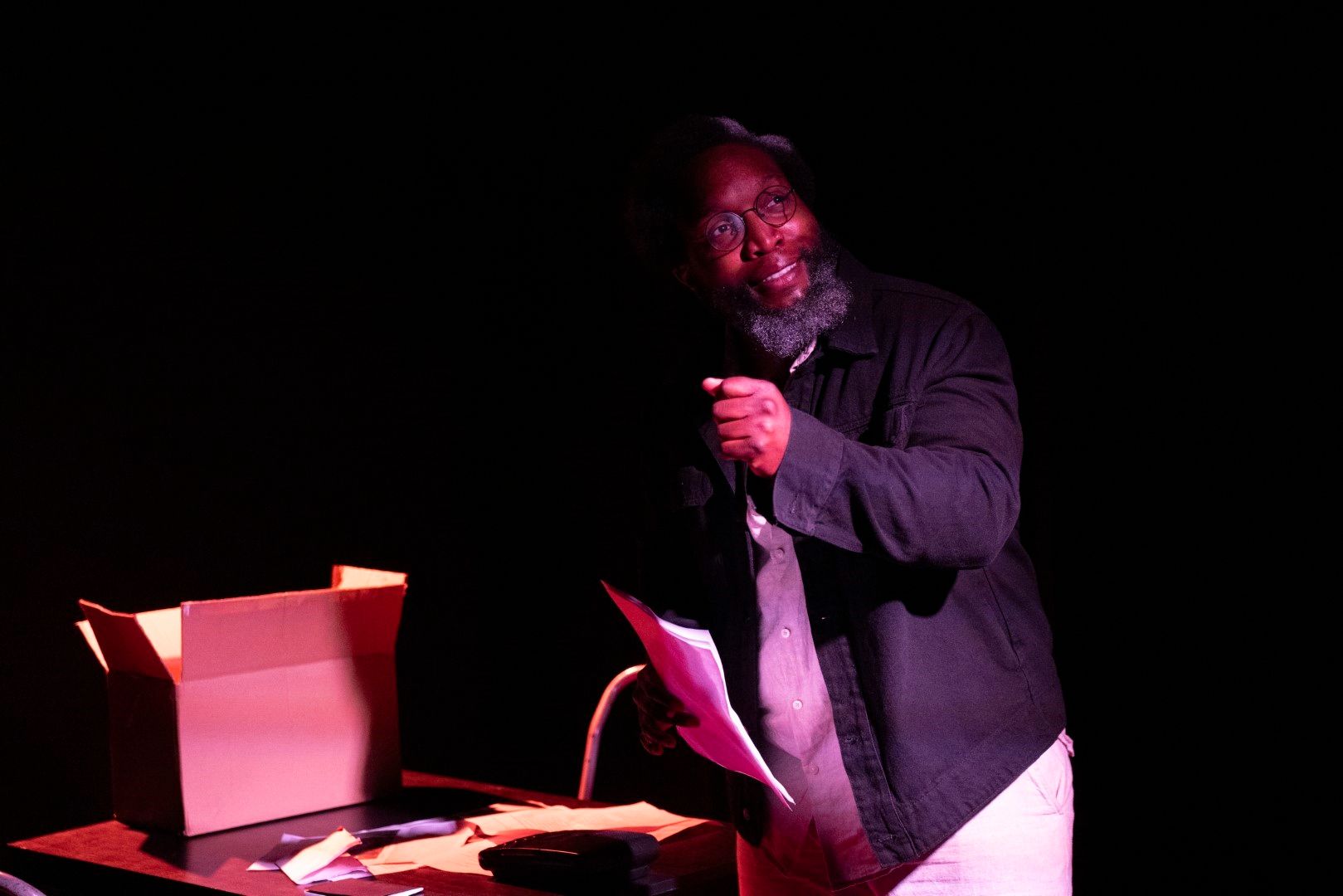
“A story that is both timely and timeless” ★★★
The story of
The Last Black Messiah
is a story that is both timely and timeless. It’s hard to imagine that the name
The Last Black Messiah
is not a nod to the 2021 Shaka King film
Judas and the Black Messiah,
both of which spotlight betrayed Black revolutionaries. King’s film tells the dramatized true story of the murder of Fred Hampton - renowned civil rights leader and deputy chairman of the Black Panther Party in Chicago - at the hands of the FBI thanks to intelligence passed on by an informant within the party whom Hampton had grown to trust. Emeka Agada’s
The Last Black Messiah
tells a similar, though fictional story of Black revolutionary leader and Howard University professor, Dr. Oko, following his imprisonment on charges of conspiring to assassinate the President of the United States.
The play’s narrative begins when Dr. Oko receives a surprise visit in prison from a former student named Asante; the ensuing 75-minutes are full of non-stop, dense conversations surrounding race, activism, identity, sacrifice, capitalism, America and more. The script also touches on legacy, memory, and the critical need for a community to tell their own story. The word ‘community’ itself is unpacked. Characters reckon with the institutional racism, violence and oppression at the heart of the ‘system’ operating at every level of American society (if not globally). As Dr. Oko and Asante speak, they reference protests in the surrounding streets. These protests, based on context, have presumably followed the assault of Rodney King by white LAPD officers. This backdrop, along with the title, serve as ever-present reminders of the reality behind Agada’s fiction.
Unfortunately the script fails to live up to its subject matter. Agada seems unwilling to kill any darlings, instead cramming countless thoughts, ideas and questions into the play’s short run time. In a misguided attempt to address everything, the play struggles to offer an original message on anything. The truth of Agada’s story is clear, his unique perspective is not. Nathaniel Brimmer-Beller’s direction fails to help break up the dialogue-heavy performance or introduce action to make the story more propulsive.
One question did stand out: is the good father the one who gives his life for his child’s future or the one who is home for dinner? Is there room for both? At its core, under the jumbled ideas and on-the-nose dialogue,
Judas and The Black Messiah
asks its audience to consider what obligation an individual has to his community versus his individual human right to joy.
Agada himself stars as the titular Black Messiah, Dr. Oko. His intimate relationship with the script is evidenced in his emotional performance. Kenneth Butler’s performance as his former student and protege, Asante, unfortunately lacks the heightened desperation and passion necessary to believe and invest in his character.
Audiences - especially those like myself who grew up in the American education system - will recognize the timelessness of
The Last Black Messiah. The facts and events of the story could apply at any point in the course of American history. The FBI has always operated as represented on stage. The system has still not been revolutionized. Unfortunately, the play does not succeed in offering a fresh perspective or insight to this conversation.
The Last Black Messiah
is full of potential, falling just short of its goal to inspire dialogue with its audience.
Venue: Brockley Jack Studio Theatre, 410 Brockley Road, London, SE4 2DH
Box office: www.brockleyjack.co.uk or 0333 666 3366 (£1.80 fee for phone bookings only)
Dates: Tuesday 28th April – Saturday 16th May 2026 at 7.30pm.
Tickets: £17, £15 conc., 14+.
Running time: Seventy minutes with no interval