




Review: INTERPLAY by Phoenix Dance Theatre at Sadler’s Wells East 24 – 27 June 2026
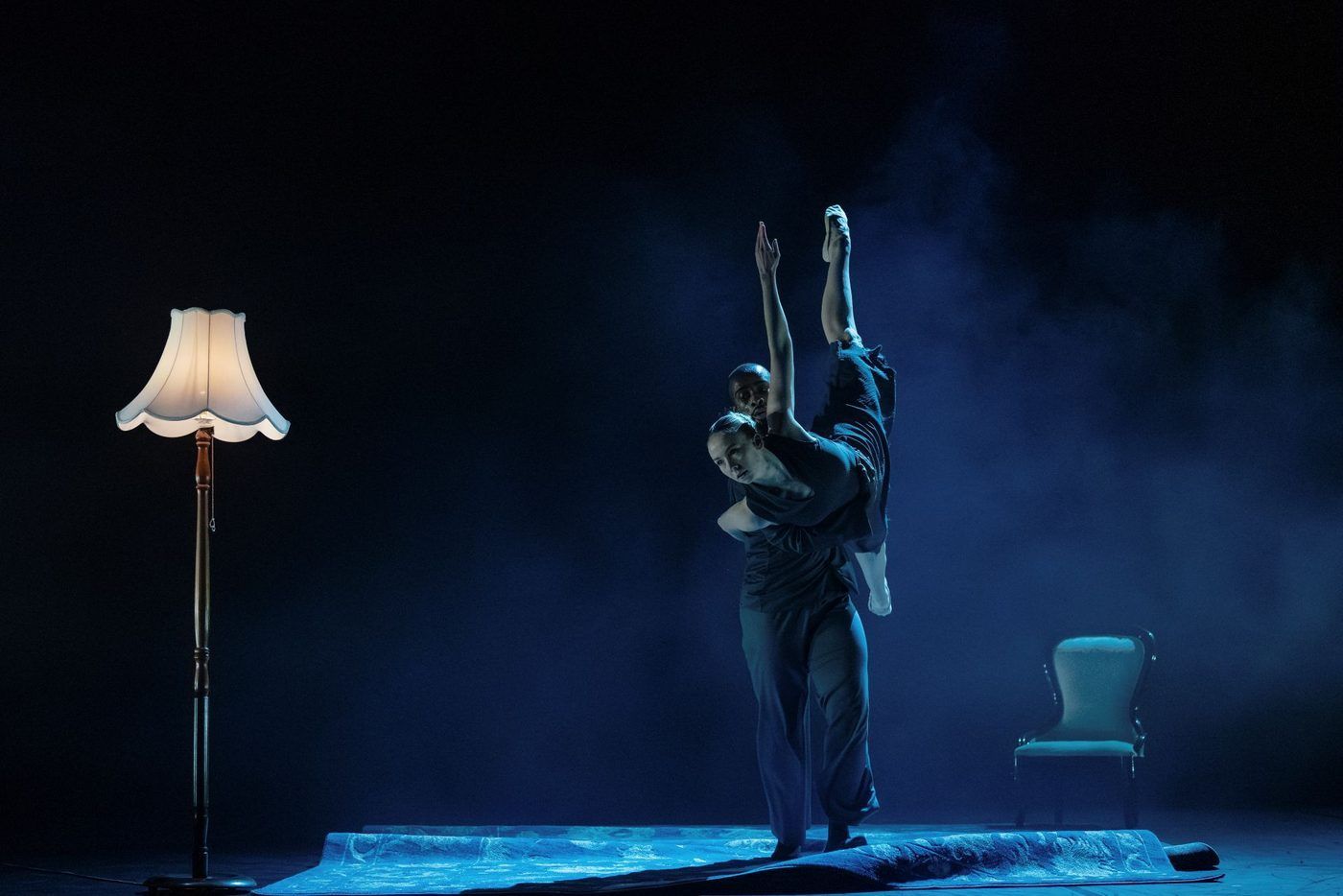
‘Playful, strained, structured and celebratory… across four works, INTERPLAY reveals Phoenix Dance Theatre’s versatility’
★★★★ ½
Phoenix Dance Theatre’s Interplay brings together four works that approach connection from different angles: intimacy, rhythm, domestic tension and collective release. As a mixed bill, the evening creates a progression of energies moving from the compact intensity of duet work to the expansive pulse of ensemble dancing.
The opening work, Marcus Jarrell Willis’s ‘Next of Kin’, is striking in its concision. The choreography feels tightly constructed and continuously connected, with each movement seeming to grow naturally out of the previous one. There is no sense of excess. The relationship between the dancers is established quickly, yet it remains layered: playful, intimate, competitive and slightly unresolved. Its ending comes almost too soon, leaving a feeling of incompletion in the best sense. The work does not over-explain itself; it finishes while its energy is still alive, creating a sense of being left wanting more.
Ed Myhill’s ‘Why Are People Clapping?!’ shifts the evening into a more experimental mode. Built around rhythm, repetition and the act of clapping, the piece is playful in concept and precise in execution. Its central idea is immediately clear, yet the choreography keeps testing how far a simple action can be stretched. Clapping becomes sound, structure, humour and social behaviour. The work’s strength lies in the clarity of its experiment: it takes something ordinary and turns it into a choreographic system. At times, the concept feels more dominant than the emotional content, but that is also part of its appeal. It invites the audience to watch rhythm being made visible through the body.
The third work, ‘Small Talk’ by Travis Knight and James Pett, is perhaps the most theatrically complete piece of the evening. Even without reading the programme notes, the audience can sense the questions at the heart of the work: how people communicate, how intimacy becomes strained, and how ordinary domestic life can hold unspoken tension. The choreography is particularly effective because it does not depend only on partnering or emotional expression. The carpet, sofa and floor lamp create a lived-in environment, giving the dancers a spatial and psychological frame to move within. These objects are not decorative. They shape the atmosphere of the work, turning the stage into a domestic interior where closeness and distance are constantly renegotiated.
What makes Small Talk compelling is the way its choreographic language allows the audience to read the relationship without needing verbal explanation. The dancers’ approaches, withdrawals, pauses and collisions suggest the difficulty of speaking honestly within a shared space. Small gestures accumulate meaning. A shift in weight, a change of direction, or a moment of stillness can reveal frustration, fatigue or tenderness. The work is strong because its subject is legible through movement itself.
The final piece, ‘Suite Release’, choreographed by Yusha-Marie Sorzano and Marcus Jarrell Willis, brings a different kind of energy to the evening. Its greatest strength is its rhythm. The dancers move with a strong sense of musicality, allowing groove, pulse and ensemble energy to carry the work forward. After the more contained world of Small Talk, this final section opens the stage into something broader and more communal. The rhythm does not simply accompany the movement; it drives it. The dancers appear to ride the music, passing energy across the group and creating a sense of release.
As a closing work, ‘Suite Release’ gives the programme a necessary lift. It celebrates the pleasure of moving together and allows individual expression to emerge within a collective structure. The piece is less psychologically focused than ‘Small Talk’, but it succeeds through atmosphere, musical force and shared momentum. Its rhythmic vitality gives the evening a satisfying final charge.
Across the four works, Interplay reveals Phoenix Dance Theatre’s versatility. The company moves between compact duet, conceptual experiment, domestic drama and rhythm-driven ensemble work with confidence. Not every piece operates in the same register, but together they create a varied and engaging evening. The strongest moments come when the choreography allows the central idea of each work to be felt directly through the body: the unfinished tension of Next of Kin, the experimental clarity of Why Are People Clapping?!, the spatial intelligence of Small Talk, and the rhythmic drive of Suite Release.
Interplay is ultimately a programme about how bodies communicate before, beyond, and sometimes in place of words. It shows connection as playful, strained, structured and celebratory. At its best, it reminds us that dance does not need to explain a relationship in order to make us feel its complexity.