


REVIEW; ATTACHMENT THEORY at Bread & Roses 14 - 18 April 2026
'Layered and nuanced.' ★★★
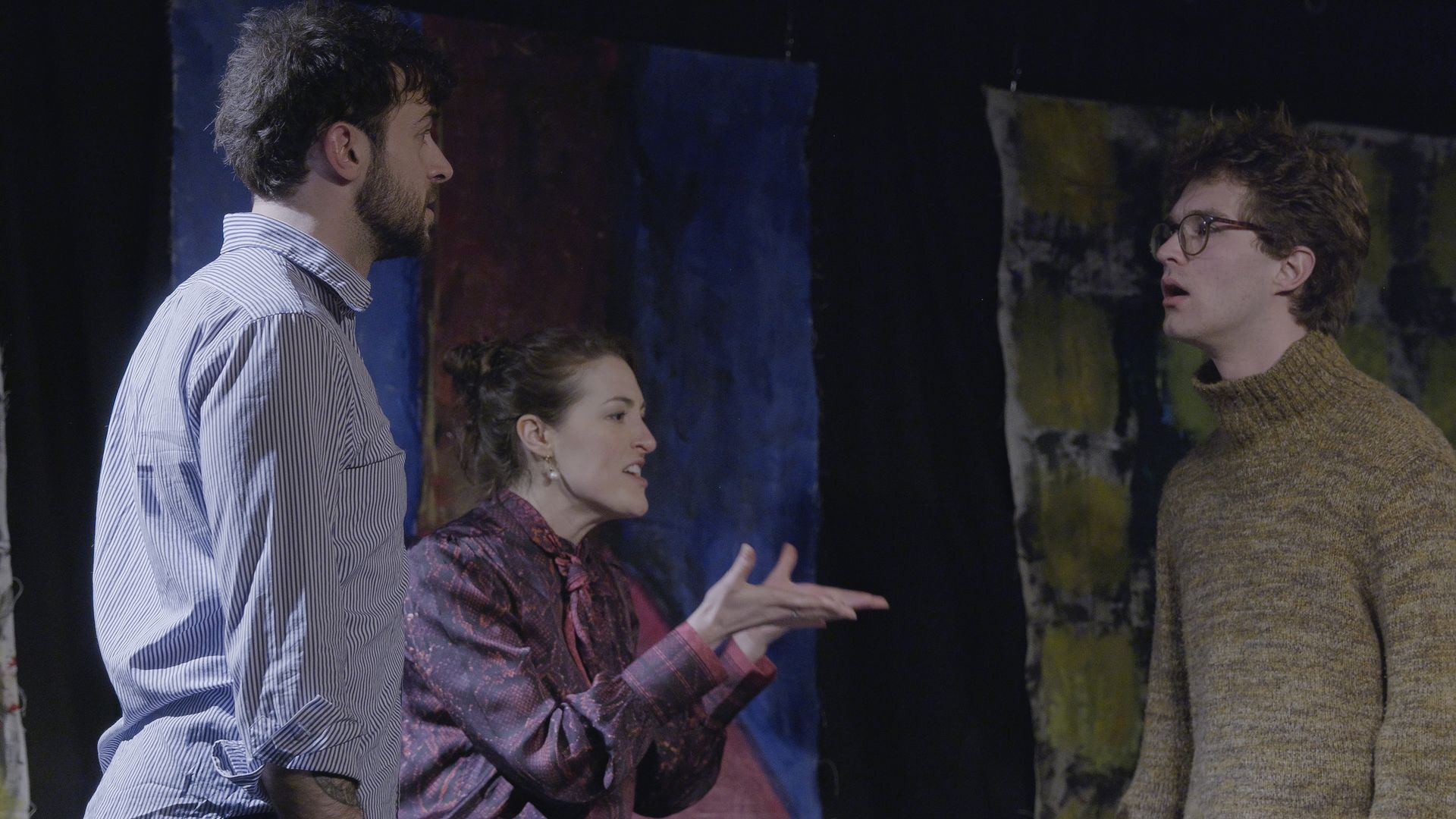
Two queer men in a relationship are both in therapy - unknowingly - with the same doctor. This is the alluring premise of Liam Scanlon’s new Lottery Grant-winning play, which premiered at the Canal Cafe and is now at Clapham’s Bread & Roses Theatre. Dan, a softly-spoken and reflective American former monk, played by Dan Holland finds himself in London, where he meets Edward, a fey and snooty aristocrat who dabbles in art and drugs. Played by Marley Brown with more theatrical posturing than realism, the contrast sets up a pleasing dynamic, although one character feels more authentic than the other. Edward comes off as more of a caricature: think Gen Z Sebastian Flyte of Brideshead Revisited with undiagnosed ADHD.
Their relationship which spools out over the course of two years becomes interdependent and not always in a mutually beneficial way. There is passion, toxicity, LSD & S&M. When Edward’s mother, cast as an old-school, eccentric duchess type who looks like a “drag queen,” wants to write a book about Ryan, the young man from a blue-collar background finds himself in receipt of a handsome advance and effectively bought out by Edward’s family - who live in a stately home complete with butlers to complete the Waugh-inspired allusion. How will this play out? Can and should this unlikely relationship survive? Can Dr Lucarelli, the American therapist played by Bernice Tougher help them navigate the choppy seas as buried traumas surface and resentments and frustrations grow?
The lengthy play with no interval has all three characters on stage for the entire 1 hour and 50 minutes. Even though we, the audience, know Ryan and Edward are seeing the therapist separately, it’s effective to hear their responses layered one on top of the other: a mille-feuille of self-examination, self-narration, self-reflection, and self-deflection. When the couple break out of therapy mode and address each other directly in moments of intense attraction orfierce combat, the play moves up a gear and the audience leans forward.
While the set is clean and modern, the staging for Attachment Theory is largely static. The therapist character who sits in her chair throughout is opaque with few lines and narratively doesn’t quite earn her keep. While her unethical lack of integrity is ultimately exposed: “Is this data sex for a future paper?” It's too little, too late and this play could potentially have worked more effectively as a shorter and leaner two-hander with the therapist offstage throughout. Liam Scanlon’s writing is layered and nuanced, full of wit and observation, although more action, surprises and stakes would wake up this tasteful talkathon which is full of potential and promise.