




Joy Isn’t Always Joy by Joseph Toonga at The Place 27 May 2026
‘raw, generous and quietly devastating’ ★★★★★
The title Joy Isn’t Always Joy already carries unease. Joseph Toonga takes the word “joy” and places pressure on it. In this work, joy becomes a mask, a habit, a defence and a way of surviving.
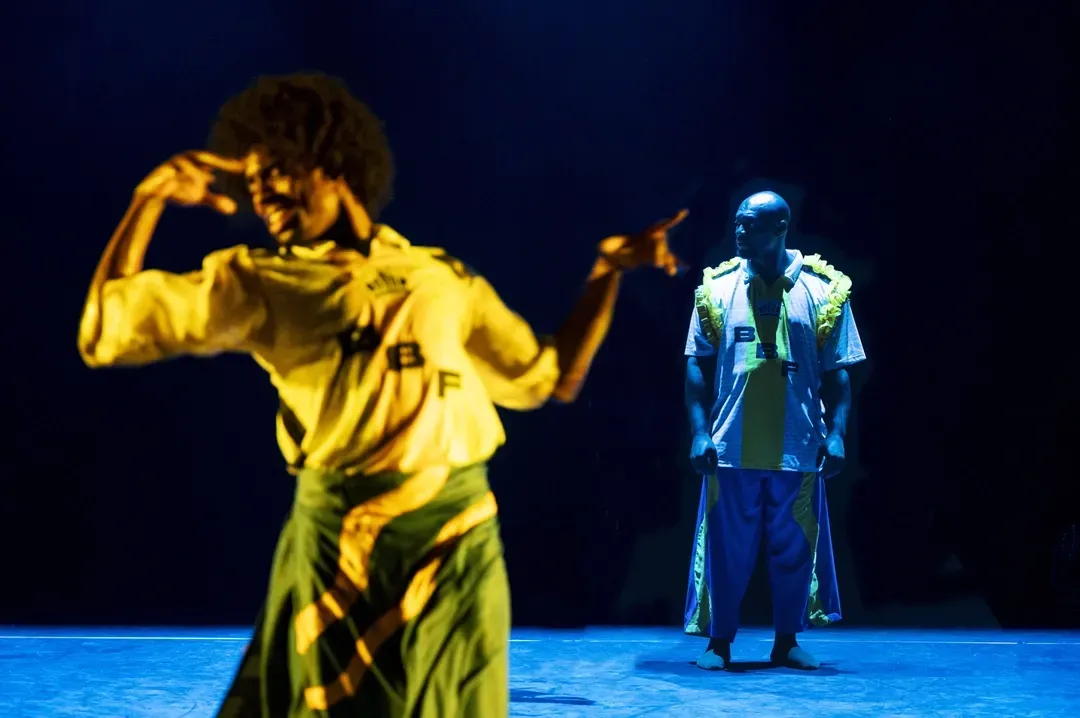
Presented at The Place, this hip hop theatre work enters the emotional lives of Black men with force and care. It looks at loneliness, stereotype, pressure and the need to stay composed while carrying private pain. The piece speaks through rhythm, contact, breath and repeated physical struggle.
From the opening moments, a group of dancers build the work through sound and movement. Body percussion, vocal calls and sharp physical signals pass between them like a challenge, then like encouragement. The exchange begins with the charge of competition. Gradually, it reveals a group of men testing how much weight they can carry together.
This opening gives the piece much of its power. The dancers listen, provoke, interrupt and support one another. A beat struck on the body becomes a way of speaking. A shout pushes the movement forward. A pause holds tension in the space. Toonga shows care inside confrontation, and he lets masculine energy move through play, pressure and protection.
Conflict runs through the choreography as a recurring physical idea. The dancers fight with the space, with each other and with themselves. Bodies fold, rebound, drop and recover. Arms pull away and reach back. Weight is thrown forward as if each performer is trying to escape something, then caught again by the group. These moments carry force because the movement feels driven by need.
One of the most memorable images comes when two dancers handle the body of a third. The scene creates discomfort because it holds several meanings at once. They control him. They restrain him. They keep him standing. Support and pressure share the same physical shape here. The image speaks clearly about brotherhood, expectation, care and strain.
The piece is rooted in hip hop, and Toonga stretches that foundation into a theatrical language shaped by spoken voice, silence, repeated gestures and close physical contact. There are moments when the performers seem to dare each other into movement. Other moments soften into care. Brotherhood appears as a source of safety, expectation, tenderness and weight.
The honesty of the performers stays with me. Nothing feels decorative or arranged only for emotional effect. Even when the choreography is tightly structured, it carries lived urgency. The dancers move from internal pressure. This gives the work its sincerity. It asks the audience to look at what these bodies hold, not only what they can do.
The work sustains a high emotional intensity, and some sections would land more sharply with greater contrast. A few transitions blur because the pressure remains at a similar temperature for long stretches. Still, that constant pressure feels connected to the world Toonga is describing. The body rarely gets full release.
Joy Isn’t Always Joy is raw, generous and quietly devastating. It places vulnerability at the centre and keeps the performers powerful. Toonga has made a work that is physically strong, emotionally direct and deeply human. It leaves us with the uncomfortable recognition that joy can become a demand, a performance and a form of protection.
The Place, King's Cross
Joseph Toonga